

When tenants are living in a property, there will inevitably be an impact on the condition of the property. Some of this will be the natural deterioration of things as they get used over time. However, there will also be times when things break, or are damaged.
What should a tenant do when repairs are needed?
If the tenant notifies the landlord about something that is in need of repair, and the landlord doesn’t take action to repair it in a timely manner, the tenant can issue them with a 14-day notice to remedy the situation.
If the problem is likely to cause injury to people or property, or is otherwise serious and urgent (eg, a burst water pipe), the tenant can have the repairs done and ask the landlord to reimburse them for it. The tenant must have made a reasonable attempt to contact the landlord about the problem first (s 45(1)(d) RTA).
Quick tip
Who pays for repair of damage?
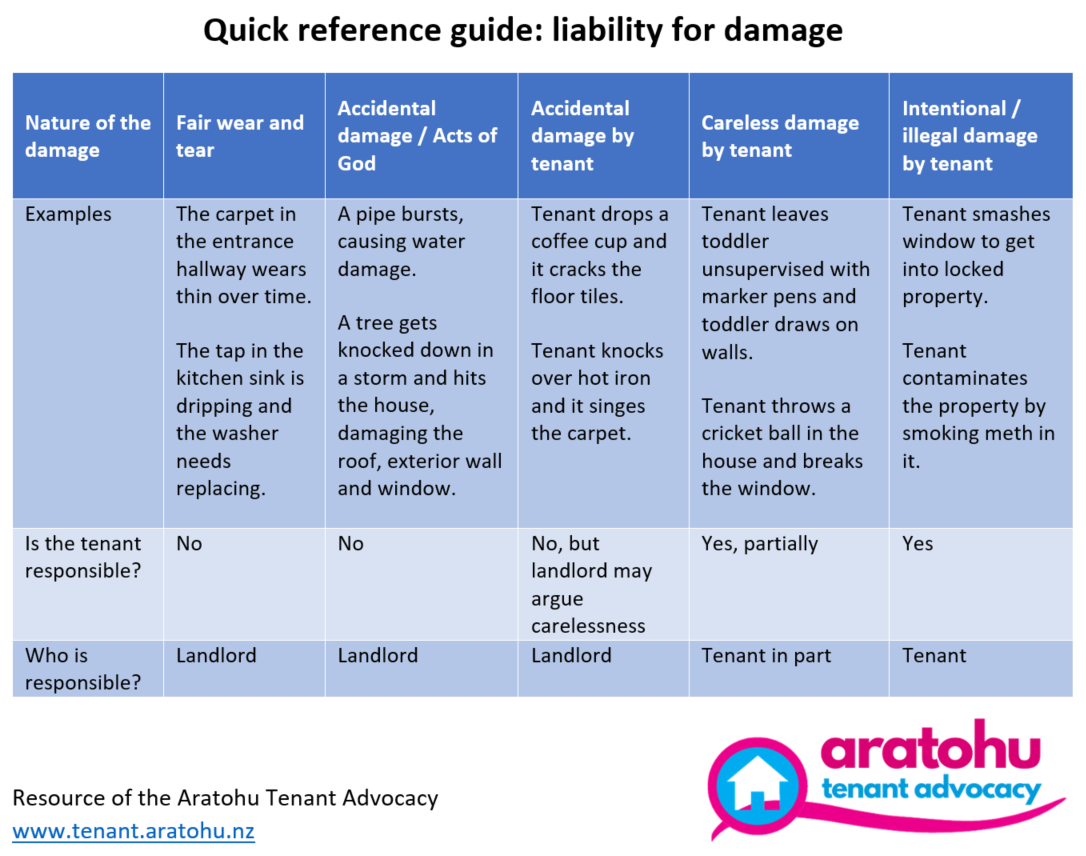
There are a number of factors to consider to determine whether it’s the landlord’s or the tenant’s responsibility to pay for repair of damage. It will depend on:
- who or what caused the damage
- how the damage was caused
- when the damage occurred
- whether the type of damage is covered by the landlord’s insurance.
The tenant is never responsible for paying for fair wear and tear (s 49A(2) RTA) or when damage is caused by a natural disaster or weather.
The tenant may have to pay for some or all of the cost of repair if they caused the damage:
- intentionally (s 49B(1)(a) RTA)
- carelessly or through an act of omission (s 49B(2) RTA)
- while committing an imprisonable offence (s 49B(1)(b) RTA).
Tenants are also responsible for paying for all damage caused by pets (s 49B(1)(c) RTA).
For a landlord to be able to claim compensation for damage, they must prove that the damage happened during the tenancy and is more than fair wear and tear.
For the tenant to avoid having to paying for damage, they must prove that they did not carelessly or intentionally cause the damage (or permit someone else to).
What if there’s a dispute over responsibility for damage?
If the landlord and tenant cannot agree over who is responsible for the damage, either party can apply to the Tenancy Tribunal for a decision. For more details see Fair wear and tear.
What proof is required of the cause of the damage?
A landlord must prove that damage to the premises occurred during the tenancy and is more than fair wear and tear. If this is established, to avoid liability, the tenant must prove they did not carelessly or intentionally cause or permit the damage. Tenants are also liable for the actions of people at the premises with their permission.
The evidence must show that it is more likely than not that the alleged thing happened. In other words, the standard of proof is the balance of probabilities.
Tenants are jointly responsible for damage
All tenants on the tenancy agreement are ‘jointly and severally liable’ for any damage, regardless of who caused it.
This means that the landlord can choose to pursue costs for damage from the tenants as a group or from one tenant individually.
If a tenant pays for costs that they feel another tenant is responsible for, and this cannot be resolved, they can take a case to the Disputes Tribunal. The case cannot be taken to the Tenancy Tribunal because the dispute is between tenants not between the tenants and the landlord.
What can a tenant do if a guest did the damage?
Tenants are responsible for intentional or careless damage caused by their guests, which may include flatmates, friends, and even strangers at a party (s 41(1) RTA). The only exception is where the tenant(s) can show that they took all reasonable steps to prevent the person from entering the premises or to remove them from the premises.
The landlord is entitled to deal directly with the tenant(s) in getting the damage fixed and paid for - they don’t have to chase the person who actually did the damage.
If it’s clear which guest(s) caused the damage, the tenant can ask them to reimburse the amount they’ve had to pay to the landlord for repairs. If the guest doesn’t reimburse the tenant, they might consider taking a claim to the Disputes Tribunal.
Did you find this information helpful?